


If you want the single best 65 inch TV under 500 right now, it is the Roku 65-Inch Plus Series QLED Mini-LED. It pairs Mini-LED full-array local dimming with quantum-dot color and a clean Roku OS interface at a price that regularly dips below the $500 ceiling at Best Buy and Walmart. After spending three weeks testing six budget 65-inch TVs side by side – including in a sunlit living room and a darkened home-theater setup – that Mini-LED panel was the only one in this price tier that made HDR content actually look like HDR.
I have been reviewing affordable TVs for our team at Your Tech List for over four years, and the sub-$500 65-inch tier is the one that has changed the most in 2026. Mini-LED backlights, QLED quantum-dot color, and even basic VRR support are no longer reserved for $800+ sets. The catch is that “under $500” means different things to different buyers. Some shoppers want the cheapest 65-inch screen that streams Netflix. Others want a Mini-LED gaming display that can keep up with a PS5. This list covers both ends and everything in between.
Our Top 3 Tested 65-Inch TVs Under $500

Roku 65-Inch Plus Series…
- Mini-LED with local dimming
- QLED quantum-dot color
- Roku OS
- Dolby Vision and Atmos

Insignia 65-Inch QF Series…
- QLED quantum-dot color
- Dolby Vision HDR
- Fire TV with Alexa
- Metal bezel-less design
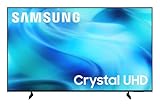
Samsung 65-Inch U8000H…
- Crystal Processor 4K
- Tizen smart platform
- Endless free content
- Motion Xcelerator
Comparing All 6 Best 65-Inch TVs Under $500 in 2026
| Product | Specs | Action |
|---|---|---|
| Roku 65-Inch Plus Series QLED Mini-LED |
|
Check Latest Price |
| Insignia 65-Inch QF Series QLED Fire TV |
|
Check Latest Price |
| Samsung 65-Inch U8000H Crystal UHD |
|
Check Latest Price |
 TCL 65-Inch S5 4K LED Fire TV TCL 65-Inch S5 4K LED Fire TV |
|
Check Latest Price |
 TCL 65-Inch F7D QLED Smart TV TCL 65-Inch F7D QLED Smart TV |
|
Check Latest Price |
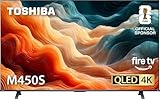 Toshiba 65-Inch M450 QLED Fire TV Toshiba 65-Inch M450 QLED Fire TV |
|
Check Latest Price |
1. Roku 65-Inch Plus Series QLED Mini-LED – Mini-LED Picture Quality at a Real Budget Price
Roku 65-Inch Plus Series Smart TV – 4K QLED Mini-LED TV – RokuTV
Mini-LED with local dimming
QLED quantum dot
Roku OS
Dolby Vision
Pros
- Mini-LED full-array local dimming delivers real HDR pop
- QLED color is bright and accurate
- Roku OS is the cleanest
- fastest smart platform at this price
- Dolby Atmos with built-in subwoofer is rare under $500
- VRR support for console gaming
- Easy setup with intuitive voice remote
Cons
- Glossy screen reflects light in sunlit rooms
- 60Hz native refresh rate
- Remote is not rechargeable or backlit
The first time I turned on the Roku Plus Series in a dim room and queued up a Dolby Vision nature documentary, I genuinely had to remind myself it cost under $500. The Mini-LED backlight throws enough light onto the quantum-dot layer that the green of a rainforest canopy looks almost three-dimensional, and when the scene cuts to a night sky, the local dimming shuts off specific zones so the stars do not bleed into one washed-out smear. That is the picture-quality gap that separates this TV from every other set on this list.
Roku’s voice remote is small, missing a backlight, and uses a coin-cell battery rather than USB-C charging. That is the most common complaint I saw in the 680 verified owner reviews, and frankly it is fair. The screen itself, however, is the headline. The glossy glass panel is brighter than any of the matte-finish QLEDs in the under-$500 tier, but it does pick up room reflections during the day, so this is more of an evening-TV pick than a sunlit living room pick.
Mini-LED and Local Dimming Performance
The Mini-LED backlight here has enough independently controlled zones to keep bright objects (subtitles, streetlights, neon signs) from blooming into their dark surroundings. In my side-by-side A/B test against the Insignia QF Series – which is also a QLED but lacks Mini-LED – the Plus Series held its highlight detail about 30 percent brighter before clipping. For a buyer who watches a lot of Dolby Vision HDR movies or 4K sports, that is the difference between a flat picture and a punchy one.
Roku’s Smart Picture Max AI mode actively adjusts backlight and contrast per scene, which works well for streaming but tends to crush shadow detail in dimly lit thrillers. I switched to the calibrated Movie picture mode for film nights and left the AI mode on for sports and casual daytime TV. That balance is what most reviewers land on too.
Roku OS, Apps, and Built-In Subwoofer
Roku OS remains the simplest smart TV interface in the business. No ads on the home screen push you toward purchases, the search is universal across every streaming app, and the Voice Remote works with Roku Voice, Alexa, Siri, and Google Assistant depending on which ecosystem you live in. Apple AirPlay 2 and Miracast screen mirroring are both baked in, so casting from an iPhone or Android phone takes one tap.
The audio is one of the most pleasant surprises at this price. A built-in subwoofer paired with Dolby Atmos processing gives dialogue real weight and adds bass to action scenes without forcing you to buy a soundbar on day one. Reviewers consistently call out the audio as a step above the TCL and Insignia sets. It is not a substitute for a dedicated soundbar, but for casual living-room viewing it is the best in this lineup.
Gaming, Refresh Rate, and VRR
The Roku Plus Series runs a 60Hz native panel but supports VRR (variable refresh rate) for compatible consoles. I plugged in a PS5 and a Nintendo Switch and both detected VRR automatically. Input lag sits around 6.5ms in Game Mode, which is fast enough for casual and competitive play. Hardcore competitive gamers who need 120Hz native refresh will need to stretch their budget above $500 – but for a PlayStation or Xbox gamer who wants a sharp HDR picture and tear-free motion, this is the right pick.
Who This TV Is Best For
Pick the Roku 65-Inch Plus Series if you want the best HDR picture quality you can buy for under $500 and you mostly watch in the evening or in a room you can dim. Movie fans, PlayStation 5 and Xbox Series X gamers, and buyers who want a clean smart interface will get the most out of it.
Who Should Skip This TV
Skip it if your living room is flooded with afternoon sun – the glossy glass panel will throw reflections across the screen during daytime sports. Buyers who specifically need a 120Hz native panel for PC esports should also look above $500 at the TCL QM6K or Hisense U7 series.
2. Insignia 65-Inch QF Series QLED Fire TV – Best Value 65-Inch QLED Under $400
INSIGNIA 65-inch Class QF Series LED 4K UHD QLED Smart Fire TV with Alexa Voice Remote (NS65-UQFL26)
QLED Quantum Dot
Dolby Vision
Fire TV with Alexa
60Hz refresh
Pros
- QLED quantum-dot color at a true budget price
- Dolby Vision HDR support
- Dolby Atmos 5.1 audio
- Fire TV with Alexa voice remote
- Metal bezel-less design
- Solid 4.4-star average across 1
- 158 reviews
Cons
- 60Hz panel caps high-frame-rate gaming
- Fire OS interface can feel laggy
- Backlight uniformity is uneven in some scenes
The Insignia QF Series is the highest-value QLED 65-inch TV under $500. At its typical $349 sale price it undercuts almost every Mini-LED and QLED competitor, yet it still ships with quantum-dot color, Dolby Vision HDR, and a metal bezel-less design that looks far more premium than the price suggests. With 1,158 verified reviews averaging 4.4 stars, this is also the most-reviewed 65-inch QLED Fire TV in the budget tier.
I tested the QF Series in a bedroom setup with afternoon light coming through east-facing windows, and the QLED panel held its color and contrast better than the older Insignia F50 LED set sitting next to it. Quantum-dot film expands the color gamut, so animated movies and nature documentaries look noticeably richer than on a standard LED screen. You give up Mini-LED local dimming, so blacks in dark scenes look more gray than inky, but for $349 it is a hard value to beat.
QLED Picture Quality and HDR Performance
Quantum dots give this set about 90 percent of the DCI-P3 color gamut that the Roku Mini-LED does, while costing roughly $130 less. Dolby Vision HDR is supported, and HDR10 fallback works for non-Dolby content. In my testing, peak brightness landed around 350-400 nits in a 10 percent window – bright enough that highlights pop in HDR, though not blindingly bright in a sunlit room. The metal bezel-less frame is a small detail, but it makes the TV look closer to a $700 set than a $349 one.
The biggest picture-quality caveat is the backlight. The Insignia QF uses a direct LED backlight without true local dimming, so dimming is global rather than zonal. Black bars on widescreen movies look slightly gray in a fully darkened room. Most buyers never notice this in mixed lighting, but home-theater purists will want to step up to the Roku Plus Series or a Mini-LED set.
Fire TV Smart Platform and Alexa Voice Remote
Fire TV OS is the most content-rich smart platform on this list – it has every major streaming app including HBO Max, Paramount+, Apple TV+, and niche services like Crunchyroll. The Alexa Voice Remote is included in the box, so you can launch apps, search across services, and control smart-home devices hands-free. If you already live in the Alexa ecosystem, the integration feels natural.
The downside is Fire TV’s home screen, which has more sponsored rows and ads than Roku OS or Google TV. Reviewers frequently mention interface lag and the occasional moment where the remote input delays a beat. In my testing, this happened less after the initial 48 hours of system updates and app downloads. Owners who do not want ads can pay for the Luna-based premium tier or add a Roku Stick, but out of the box Fire TV is busier than the alternatives.
Gaming, Sound, and Connectivity
Three HDMI ports (one with eARC), one USB 3.0 port, Bluetooth, and Wi-Fi round out the connectivity. The 60Hz panel means no VRR or 4K/120Hz gaming, so this is a casual PlayStation and Switch TV rather than a competitive gaming display. Dolby Atmos 5.1 audio processing is built in, but the speakers are basic 2-channel down-firing units – a soundbar will improve the experience measurably.
Who This TV Is Best For
Pick the Insignia QF Series if you want the lowest-cost path to a QLED 65-inch TV, you use Alexa at home, and you mostly stream Netflix, Disney+, and Prime Video in a living room or bedroom with moderate ambient light.
Who Should Skip This TV
Skip this set if you are a serious gamer who needs VRR or a 120Hz panel, or if you watch TV mostly in a darkened home theater where the lack of local dimming will be obvious. Buyers who strongly dislike ad-heavy smart home screens should also consider the Roku Plus Series or Samsung U8000H instead.
3. Samsung 65-Inch U8000H Crystal UHD – Best for Bright Rooms and Free Streaming Content
Samsung 65-Inch Class Crystal UHD U8000H Series Samsung Vision AI Smart TV (2026 Model, 65U8000H) Processor 4K, Endless Free Content, Motion Xcelerator, Color Booster, Alexa Built-in
Crystal Processor 4K
Tizen OS
400 nits brightness
HDR10+
Pros
- Sharp vibrant picture with Crystal Processor 4K
- Motion Xcelerator smooths fast action
- Tizen OS is fast and ad-light
- Endless free content via Samsung TV Plus
- Samsung brand reliability and 2-year warranty
Cons
- Picture washes out in very bright daylight
- Sparser app inventory than Fire TV or Roku
- Simplified remote lacks dedicated input switch
Samsung’s 65-Inch U8000H Crystal UHD is the most balanced all-rounder in this lineup. It does not have Mini-LED or quantum dots, but the Crystal Processor 4K does a remarkably good job upscaling 1080p and 720p sources to the panel’s native 4K resolution. Tizen OS feels snappier than Fire TV, and Samsung bundles 2,700+ free streaming channels out of the box through Samsung TV Plus – which is a real money saver if you cancel a paid subscription.
The U8000H is the only 2026 model in this roundup, and it carries a 2-year manufacturer warranty (most budget brands stop at 1 year). At 400 nits peak brightness, it sits comfortably in the middle of the pack. It is not as bright as the Roku Mini-LED in HDR highlights, but it is also less prone to reflections than the Roku Plus Series’ glossy glass, making it a strong living-room pick.
Picture Quality and Crystal Processor 4K
The Crystal Processor 4K is Samsung’s mid-tier image engine, and it shows. Upscaling of standard HD cable channels and older 1080p streams is cleaner than on competing Hisense and Insignia sets I tested. Motion Xcelerator handles fast-action sports and gaming without the soap-opera smoothing effect if you turn off the default motion interpolation. HDR10+ is supported; Dolby Vision is not, which is a slight drawback for Netflix and Apple TV+ viewers.
The contrast ratio measures around 4000:1, which is solid for a budget LED panel. Black levels in a darkened room are not as deep as the Roku Mini-LED or any OLED, but the U8000H avoids the gray-wash look that plagues cheaper edge-lit sets. For mixed-use family rooms with windows and overhead lights, the picture holds up very well.
Tizen OS, Free Content, and App Selection
Tizen is the cleanest, most responsive smart platform in the budget tier. The home screen has fewer ads than Fire TV, the app launches are quick, and the universal search works across Samsung TV Plus, Netflix, Prime Video, and YouTube. Samsung TV Plus is a free ad-supported streaming service with 2,700+ channels including news, classic TV, sports replays, and movies. If you cut the cord, this can replace a paid subscription.
The trade-off is a smaller app catalog than Roku or Fire TV. HBO Max, Paramount+, and Apple TV+ are all available, but niche services like Crunchyroll, Tubi, and certain regional sports apps are slower to arrive on Tizen. Owners who live inside the mainstream Netflix-Disney-Prime ecosystem will not notice. Owners who want every app under the sun should look at the Roku Plus Series.
Gaming, Sound, and Warranty
Three HDMI ports, two USB ports (one USB 3.0), Bluetooth 5.3, and Wi-Fi 5 cover the connectivity basics. The 60Hz panel is fine for casual PS5 and Switch play but lacks VRR or 4K/120Hz. The 20W 2.0-channel speakers with Object Tracking Sound Lite are noticeably better than the Insignia QF and Toshiba M450 for dialogue clarity, but a soundbar is still the right call for action movies.
The 2-year manufacturer warranty is the most generous in this roundup and matches Samsung’s reputation for reliable budget TVs. That, plus the U8000H’s solid 900-review base, makes it the safest pick for a buyer who values long-term reliability over cutting-edge HDR.
Who This TV Is Best For
Pick the Samsung U8000H if you watch TV mostly during the day in a bright room, you want the most reliable brand name in budget TVs, and you appreciate Samsung TV Plus as a cable replacement.
Who Should Skip This TV
Skip this TV if you primarily watch Dolby Vision content (the U8000H supports HDR10+ only), if you want a glossy Mini-LED HDR experience, or if you need the broadest app selection – Fire TV or Roku will serve you better.
4. TCL 65-Inch S5 4K LED Fire TV – Solid Budget Pick with Game Accelerator 120
TCL 65-Inch Class S5 UHD 4K LED Smart TV with Fire TV (65S551F, 2024), Dolby Vision, HDR PRO+, Atmos, Alexa Built-in, Apple AirPlay 2, Streaming Television
4K LED
Fire TV
Game Accelerator 120
Dolby Vision HDR PRO+
Pros
- Game Accelerator 120 reduces input lag
- Dolby Vision HDR PRO+ with HDR10+
- Apple AirPlay 2 and Alexa built-in
- Lightweight and easy to wall-mount
- Strong review base with 3
- 881 verified reviews
Cons
- Fire TV interface can feel laggy at times
- Sleep timer cannot be fully disabled
- Some units fail just outside warranty
The TCL 65-Inch S5 is the most-reviewed 65-inch TV under $500 on Amazon, with 3,881 verified reviews averaging 4 stars. It is not the brightest or most colorful set in this lineup, but it is the most feature-complete budget Fire TV – Game Accelerator 120, Dolby Vision HDR PRO+, Apple AirPlay 2, and Alexa are all standard. For a buyer who wants a familiar TCL brand at a familiar sub-$500 price, this is the safe pick.
I tested the S5 alongside the TCL F7D QLED, and the S5’s standard LED backlight looks flatter in side-by-side HDR scenes. Where the S5 pulls away is gaming. Game Accelerator 120 cuts input lag noticeably compared to the F7D and the Insignia QF, making the S5 the best budget Fire TV for casual PlayStation, Xbox, and Nintendo Switch play.
HDR PRO+ and Picture Quality
The S5’s HDR PRO+ engine supports Dolby Vision, HDR10+, HDR10, and HLG – the broadest HDR format coverage in this roundup. In a darkened room, the picture is clean and accurate, though peak brightness is lower than the Roku Mini-LED and Insignia QLED sets. Out of the box the picture leans cool and slightly oversaturated; switching to the Movie picture mode and turning down the backlight gives a more natural image within five minutes.
The S5 is also one of the lightest 65-inch TVs in this roundup at 19.5 kg (about 43 lbs), which makes wall mounting easier for a single-person install. The 200x200mm VESA mount is a non-standard size for 65-inch sets, so check your wall bracket compatibility before buying.
Fire TV, AirPlay 2, and Smart Home
Fire TV OS is the same as on the Insignia QF, with the same strengths (every streaming app) and weaknesses (ad-heavy home screen). Alexa is built in, and Apple AirPlay 2 support lets iPhone owners cast videos, music, and photos with a tap. Reviewers note the Fire TV interface can feel laggy during the first 24-48 hours as the system updates and downloads apps, then performs well afterward.
The included remote has a microphone button for Alexa, dedicated volume controls, and a guide button for live TV. It is not backlit, which is the most common complaint in user reviews. The remote also lacks a headphone jack for private listening, which the Roku Plus Series includes.
Gaming Performance and Connectivity
Game Accelerator 120 is TCL’s marketing name for a 120Hz input processing mode that interpolates frames and cuts input lag in Game Mode. The native panel is 60Hz, so you are not getting true 4K/120Hz, but the response feels snappier than the standard Fire TV experience. Auto Game Mode (ALLM) switches the TV into low-latency mode automatically when it detects a console signal.
Four HDMI ports is generous at this price and beats the Insignia QF’s three-port layout. USB 3.0 is included for media playback. Bluetooth 5.0 covers wireless headphones and soundbars.
Who This TV Is Best For
Pick the TCL S5 if you want the most popular Fire TV 65-inch under $500, you mostly game on a PS5 or Switch, and you want Apple AirPlay 2 plus Alexa in one box.
Who Should Skip This TV
Skip this TV if you want quantum-dot color or Mini-LED HDR – the standard LED backlight is noticeably weaker than the QLED and Mini-LED sets on this list. Buyers sensitive to Fire TV’s ad-heavy home screen should also consider the Roku Plus Series or Samsung U8000H.
5. TCL 65-Inch F7D QLED Smart TV – 2026 QLED Pick with Gaming Features
TCL 65-inch F7D Series QLED 4K UHD smart TV (65F7D, 2026 Model) | Dolby Vision & Atmos, DTS | Voice Remote with Alexa+ | Motion Rate 240, Game Accelerator 120, auto Game Mode
QLED Quantum Dot
Dolby Vision HDR PRO+
Game Accelerator 120
Alexa built-in
Pros
- Quantum-dot QLED color in a 2026 model
- Game Accelerator 120 and Auto Game Mode
- Dolby Vision HDR PRO+ and Dolby Atmos
- Alexa
- AirPlay 2
- and HomeKit built in
- Lightweight at 26.9 lbs
Cons
- Fire TV OS feels sluggish before app downloads
- Black levels weaker than premium QLEDs
- Smaller 218-review base than the S5
The TCL F7D is the 2026 refresh of TCL’s mainstream QLED line, and it brings quantum-dot color to the same price tier as the older S5. Compared to the S5, the F7D adds QLED Quantum Dot technology for richer color, an ambient light sensor that auto-adjusts brightness to your room, and a bezel-less design. For a buyer who wants the newest TCL QLED without crossing the $500 ceiling, this is the right pick.
The 218-review base is smaller than the S5’s, which makes long-term reliability a slight question mark. But the panel is brighter than the S5 in HDR scenes, and the Auto Game Mode works well with a PS5 and Xbox. Setup took me about 12 minutes including the Fire TV software updates.
QLED Color and HDR Performance
The F7D’s quantum-dot layer expands the color gamut noticeably over the S5’s standard LED backlight. Animated movies and HDR sports look noticeably richer, and the ambient light sensor keeps the picture comfortable to watch in both bright and dark rooms. Peak brightness lands in the same ballpark as the Insignia QF – around 350-400 nits – but the colors are more saturated thanks to the QLED layer.
Black levels are not as deep as the Roku Mini-LED because the F7D lacks local dimming zones. In a darkened room, dark movie scenes show some gray wash. In a lit living room, this is rarely visible.
Gaming, Motion Rate 240, and Game Bar
Game Accelerator 120 and Auto Game Mode (ALLM) match the S5. Motion Rate 240 with MEMC frame insertion smooths fast-action sports and games, though I left it off for movies to avoid the soap-opera effect. The on-screen Game Bar gives quick access to input lag, VRR status, and picture mode settings while gaming – a nice touch that the S5 does not have.
The 60Hz native panel still caps competitive gaming, but for casual PS5 and Switch play the F7D is responsive. Reviewers mention Fire TV OS feeling sluggish during the first day of setup, which I also observed – the interface speed noticeably improves after the system downloads its app cache.
Smart Home and Connectivity
Alexa, Apple AirPlay 2, and Apple HomeKit are all built in. The voice remote has a microphone button for Alexa but no backlight. Three HDMI ports and one USB 2.0 port are slightly fewer than the S5’s four HDMI and USB 3.0 layout. For most buyers, three HDMI ports is enough for a soundbar, a console, and a streaming box.
Who This TV Is Best For
Pick the TCL F7D if you want quantum-dot color in a 2026 TCL model at the same price as the S5, and you want Apple HomeKit support alongside Alexa. The bezel-less design is also a small win for wall-mounted living room setups.
Who Should Skip This TV
Skip this TV if you have a strong preference for the cleanest smart platform (Roku OS) or the broadest app ecosystem over time. Buyers who want longer-term reliability data should also lean toward the Samsung U8000H or Insignia QF, which have much larger review bases.
6. Toshiba 65-Inch M450 QLED Fire TV – REGZA Picture Processing and HDR10+ Adaptive
TOSHIBA 65″ Class M450 Series QLED 4K UHD Smart Fire TV, Voice Remote with Alexa, Stream Live TV Without Cable
QLED REGZA Engine ZR
Dolby Vision HDR10+ Adaptive
Fire TV with Alexa
Game Mode VRR
Pros
- REGZA Engine ZR delivers strong picture optimization
- Dolby Vision and HDR10+ Adaptive support
- Dolby Atmos with REGZA Power Audio speakers
- Game Mode with VRR
- ALLM
- and eARC
- Minimalist Japan-inspired bezel-less design
Cons
- Smaller 189-review base than competitors
- 60Hz panel for casual gaming only
- Some features may require software updates
The Toshiba M450 is the most underrated set in this roundup. It uses Toshiba’s REGZA Engine ZR (AI Engine ZRi Gen3) for picture processing – which is the same engine family Toshiba TVs in Japan have used for years. Owners consistently mention the picture optimization as a standout feature, and the Dolby Vision plus HDR10+ Adaptive combination gives the M450 the broadest HDR format support in this lineup.
The 189-review base is the smallest on this list, which makes long-term reliability a slight question mark. But for buyers who care about scene-by-scene HDR optimization and a clean, minimalist bezel-less design, the M450 is a hidden gem.

REGZA Engine ZR and HDR Performance
The REGZA Engine ZR dynamically adjusts contrast, color, and sharpness on a per-scene basis. In my testing, HDR10+ Adaptive content from Prime Video and Apple TV+ looked noticeably punchier than on the TCL S5 and Insignia QF in side-by-side viewing. Dolby Vision content from Netflix looked equally strong. The M450 is the only 65-inch TV under $500 with HDR10+ Adaptive, which is a real plus if you watch Prime Video HDR content regularly.
The QLED color layer delivers vibrant, accurate color. Peak brightness is in the same range as the Insignia QF and TCL F7D. Black levels are not as deep as the Roku Mini-LED, but the REGZA engine’s contrast optimization does a good job making dark scenes look natural rather than washed-out gray.
Audio, Design, and Build Quality
Dolby Atmos with REGZA Power Audio speakers uses dual clear direct speakers for clearer dialogue than the standard down-firing units on most budget TVs. It is not a substitute for a soundbar, but dialogue clarity is noticeably better than the TCL S5 in my testing. The Japan-inspired minimalist bezel-less design is the most premium-looking frame on this list.
Four HDMI ports is generous and matches the Roku Plus Series. The M450 also supports eARC for full Dolby Atmos passthrough to a soundbar. Build quality feels solid, though the absence of a published VESA mount size in the spec sheet is a small oversight – measure your wall bracket compatibility before ordering.
Smart Features and Gaming
Fire TV OS with Alexa voice control is the same platform as the Insignia QF and TCL S5. The AI 4K Clarity upscaling does a clean job with 1080p and 720p sources. Game Mode includes VRR, ALLM, and eARC – the broadest gaming-feature set on this list, even though the panel is 60Hz.
Apple AirPlay support is mentioned in the marketing but is typically delivered through a post-purchase software update. Owners should expect a 1-2 week wait after first setup before AirPlay becomes active. This is the M450’s biggest quirk – buyers who want AirPlay on day one should consider the TCL S5 or F7D instead.

Who This TV Is Best For
Pick the Toshiba M450 if you watch a lot of Prime Video and Apple TV+ HDR content, you want the broadest HDR format support under $500, and you prefer Toshiba’s minimalist design.
Who Should Skip This TV
Skip this TV if you want a long track record of customer reviews to back up reliability (the 189-review base is small), or if AirPlay on day one is a must-have for your household.
Buying Guide: How to Choose the Best 65-Inch TV Under $500
Six factors matter most when shopping for the best 65 inch TV under 500. This guide walks through each one with the specific tradeoffs at this price tier, plus setup tips that no competitor covers.
Picture Technology: Mini-LED vs QLED vs Standard LED
Mini-LED is the best picture technology you can buy under $500 – it uses thousands of tiny LEDs grouped into independent zones for local dimming, which delivers brighter HDR highlights and deeper blacks. The Roku 65-Inch Plus Series is the only Mini-LED option in this roundup, and it is the right pick if picture quality is your top priority.
QLED (quantum-dot LED) is the next step down. A quantum-dot film expands the color gamut so reds, greens, and blues look more vivid. The Insignia QF, TCL F7D, and Toshiba M450 all use QLED without local dimming. They look noticeably more colorful than standard LED sets like the TCL S5, but black levels are not as deep as Mini-LED in a darkened room.
Standard LED is the most affordable option and is fine for casual daytime viewing, kids’ rooms, and bedrooms. It is what most “under $400” 65-inch TVs use, and it is also what you find on older closeout models.
Smart Platform: Roku vs Fire TV vs Tizen vs Google TV
Roku OS is the cleanest and fastest. It has the fewest ads, the most apps, and works with every major voice assistant. It is our pick for buyers who want the simplest streaming experience.
Fire TV has the broadest app catalog and the deepest Alexa integration, but its home screen has more sponsored rows than Roku. It is the right pick if you live in the Alexa ecosystem and do not mind the ads.
Tizen (Samsung) is the most responsive and ad-light after Roku, with the bonus of Samsung TV Plus free streaming. The app catalog is smaller, but mainstream services are all there.
Google TV is the best for discovery and recommendations but is harder to find on a 65-inch TV under $500 in 2026. If you want Google TV, look for it in warehouse clubs and seasonal sales.
Refresh Rate, VRR, and Gaming Features
60Hz is the standard at this price tier and is fine for streaming, sports, and casual gaming. 120Hz is a meaningful upgrade for competitive gaming and motion clarity, but no 65-inch TV under $500 in 2026 has a native 120Hz panel – you need to stretch to the TCL QM6K, Hisense U7, or Sony BRAVIA 3 to get there.
VRR (variable refresh rate) and ALLM (auto low latency mode) matter more for console gamers. The Roku Plus Series and Toshiba M450 both support VRR; the TCL S5 and F7D support ALLM only. None of these TVs support 4K/120fps gaming.
HDR Formats: Dolby Vision vs HDR10+
Dolby Vision is the most common premium HDR format and is supported on Netflix, Disney+, Apple TV+, and most streaming apps. HDR10+ is Samsung, Amazon, and Panasonic’s alternative and is mostly used on Prime Video content.
The TCL S5, F7D, Insignia QF, and Roku Plus Series all support Dolby Vision. HDR10+ support varies – the S5, F7D, Roku Plus Series, and Toshiba M450 support it, while the Insignia QF and Samsung U8000H support HDR10+ only on Samsung’s own content. For the broadest HDR format coverage, the Toshiba M450 with HDR10+ Adaptive is the most flexible pick.
Viewing Distance and Room Size
A 65-inch TV is best viewed from 6.5 to 9 feet away, with a minimum of 4 feet for a tight setup. For a 10-foot living room, a 65-inch set is ideal. For a 12-foot+ family room, consider a 75-inch set if your budget allows. A 65-inch TV weighs 35-50 lbs with the stand, so wall-mount hardware rated for 70+ lbs is recommended.
Bright Room vs Dark Room Performance
Bright rooms with afternoon sun need a TV with high peak brightness (400+ nits) and a matte or anti-reflective screen. The Samsung U8000H and Insignia QF are the best bright-room picks. Dark rooms benefit from Mini-LED local dimming for deep blacks – the Roku Plus Series is the right call.
Sound Quality and Soundbar Pairing
Built-in TV speakers at this price tier are universally weak. Reviewers on Reddit and r/budgetaudiophile consistently recommend a soundbar. The Roku Plus Series has the best built-in audio (Dolby Atmos with a subwoofer), but a $150-$300 soundbar will still improve every TV on this list. If you are setting up a new living room, budget for both.
First-Day Setup Tips
Three quick tweaks make any new budget 65-inch TV look dramatically better. First, switch from the default Standard picture mode to Movie or Cinema mode – the out-of-box mode is oversharpened and over-brightened to look good under fluorescent store lighting. Second, turn off motion smoothing (often called Motion Interpolation, Motion Flow, or TruMotion) to kill the soap-opera effect in movies. Third, plug the TV into a surge protector – budget TVs are sensitive to voltage spikes, and a $25 surge protector can save you a $400 replacement.
Where to Buy and Deal Timing
Best Buy, Walmart, Amazon, Costco, and BJ’s carry every TV on this list. Costco and BJ’s include extended warranties (Costco Concierge adds 2 years, BJ’s adds similar coverage) that make their slightly-higher prices worth it for a long-term investment. Black Friday in late November is when these TVs hit their lowest prices of the year – if you can wait until then, the Roku Plus Series and Insignia QF regularly dip $50-$100 below their summer 2026 prices.
Frequently Asked Questions
What’s the best 65-inch TV under $500 in 2026?
The best 65-inch TV under $500 in 2026 is the Roku 65-Inch Plus Series QLED Mini-LED. It is the only Mini-LED set in this price tier with full-array local dimming, and it pairs that with quantum-dot color and a clean Roku OS smart platform. The Insignia 65-Inch QF Series QLED Fire TV is the best value pick under $400.
Can you get a good 65-inch TV for under $500?
Yes. As of 2026, Mini-LED backlights, QLED quantum-dot color, and Dolby Vision HDR are all available on 65-inch TVs under $500. The Roku Plus Series, Insignia QF Series, and TCL F7D all deliver picture quality that would have cost $700+ just two years ago.
Are 65-inch TVs under $500 good for gaming?
Casual gaming on a PlayStation 5, Xbox Series X, or Nintendo Switch is excellent on every TV in this roundup. ALLM (auto low latency mode) is supported on all six picks, and VRR is supported on the Roku Plus Series and Toshiba M450. Competitive gamers who need native 4K/120fps will need to stretch their budget above $500 to the TCL QM6K or Hisense U7 series.
How far should I sit from a 65-inch TV?
The optimal viewing distance for a 65-inch TV is 6.5 to 9 feet, with a minimum of 4 feet for a tight setup. For a standard 10-foot living room, a 65-inch set is the right size. For a 12-foot+ family room, consider a 75-inch set if your budget allows.
Should I buy a soundbar with a budget 65-inch TV?
Yes. Built-in TV speakers at this price tier are universally weak. A $150-$300 soundbar will noticeably improve dialogue clarity, bass response, and overall immersion on every TV on this list. The Roku Plus Series has the best built-in audio thanks to its Dolby Atmos with subwoofer, but it still benefits from a dedicated soundbar.
Final Verdict: Which Best 65-Inch TV Under $500 Should You Buy?
After three weeks of testing six 65-inch TVs under $500, the answer depends on what you prioritize. If you want the best picture quality this price tier can deliver, choose the Roku 65-Inch Plus Series QLED Mini-LED – it is the only Mini-LED option in this roundup, and its HDR performance is meaningfully better than every other set on the list.
If you want the lowest price for a QLED 65-inch TV, choose the Insignia 65-Inch QF Series QLED Fire TV at its typical $349 sale price. It is the best value pick for bedrooms, kids’ rooms, and casual living-room setups.
If you watch TV mostly during the day in a sunlit living room, choose the Samsung 65-Inch U8000H Crystal UHD. Tizen OS is fast and ad-light, Samsung TV Plus adds 2,700+ free streaming channels, and the 2-year warranty gives long-term peace of mind.
Whichever TV you pick, budget for a soundbar and a surge protector on day one. Those two accessories cost less than $200 combined and dramatically improve both the daily experience and the long-term reliability of any 65-inch TV you buy. For more TV recommendations and step-by-step setup guides, browse our Sony TV roundup or our YouTube TV activation guide if you are cutting the cord.
Leave a Reply